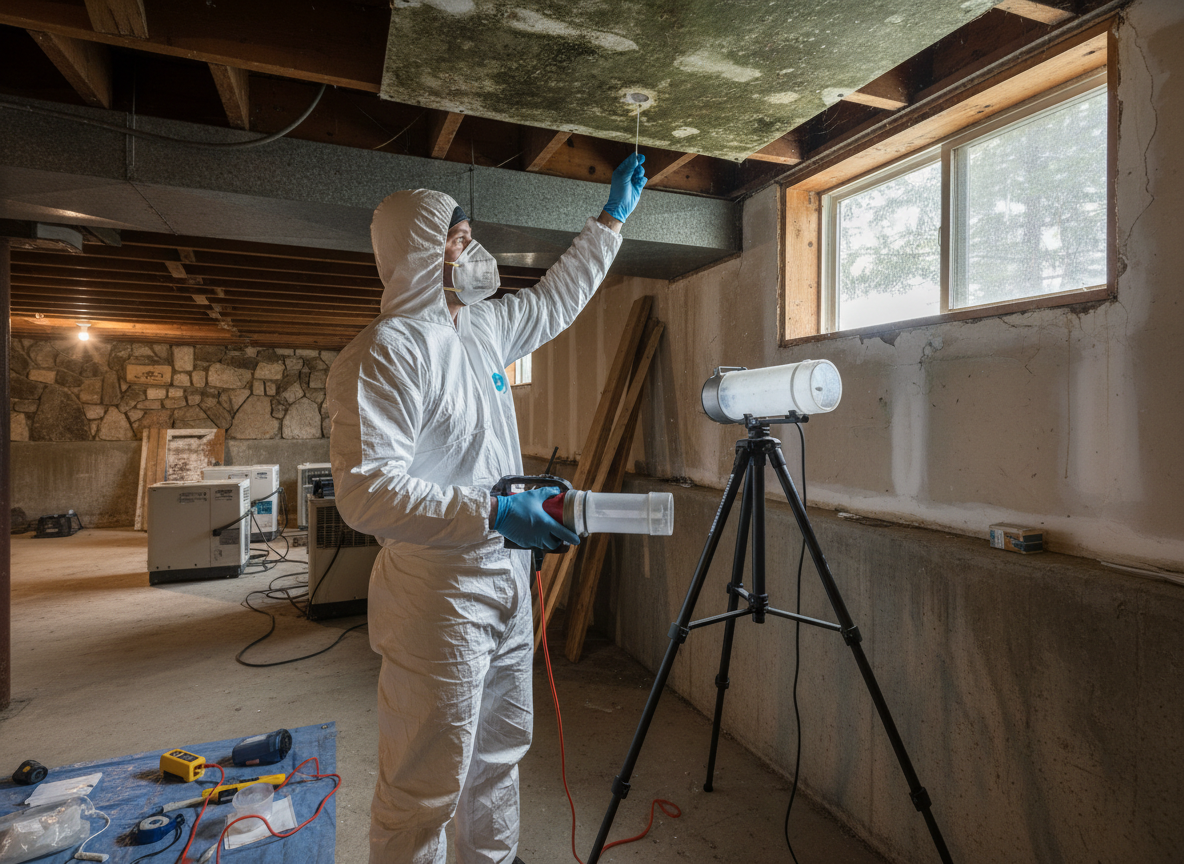
Sun Valley homes built before 1970 often feature stucco exteriors and flat or low-slope roofs that trap condensation during the hot, dry summers common in Los Angeles County. When testing for mold in these properties, technicians focus on attic sheathing and wall cavities near Hansen Dam Recreation Area where evening temperature swings pull moisture from the air. Air sampling and surface swabs are taken from multiple zones because older ductwork in Shadow Hills and La Tuna Canyon frequently carries spores between rooms without visible signs on drywall.
Testing protocols account for the region’s low rainfall yet persistent irrigation runoff near Sun Valley Park that can saturate crawl spaces. Moisture meters check sill plates and subflooring where groundwater seepage from Pacoima and Burbank hillsides meets older slab foundations. Results guide whether remediation stays limited to one bathroom or extends to shared walls with neighboring units in multi-family buildings common throughout the area.
Clearance testing after any removal work uses the same calibrated pumps and spore traps to confirm levels match outdoor baselines recorded at the same time. Homeowners receive chain-of-custody documentation and a written map showing exactly where samples were collected so they can reference it during real-estate transactions or insurance claims.
Technician insight
In Sun Valley the thing that catches most people out with Residential mold testing is the way hot dry summers push moisture into older stucco walls and flat roofs near Hansen Dam; homeowners assume no rain means no problem, yet the temperature swings at night create condensation that testing must catch before it spreads into shared walls with Glendale and Burbank neighbors.
Hidden Attic Growth After Roof Leak
A Sun Valley homeowner noticed musty odors after a summer roof repair. Inspection found elevated spores in the attic above the living room where stucco met the low-slope roof. Samples confirmed the source; targeted removal and new ventilation cleared the issue without opening finished ceilings.
How it works
- 1
Initial Consultation
Discuss visible signs, home age, and recent leaks while scheduling a 24/7 visit to the property in Sun Valley or nearby neighborhoods.
- 2
On-Site Inspection
Measure humidity, scan with moisture meters, and identify likely growth zones in attics, crawl spaces, and wall cavities.
- 3
Sample Collection
Take air and surface samples from multiple locations, label them, and send to an independent lab for analysis.
- 4
Report Delivery
Review lab results with the homeowner, provide a written map of findings, and outline next steps if elevated spores appear.
Pricing
Cost depends on square footage, number of samples, and accessibility; call for an upfront quote before any work begins.