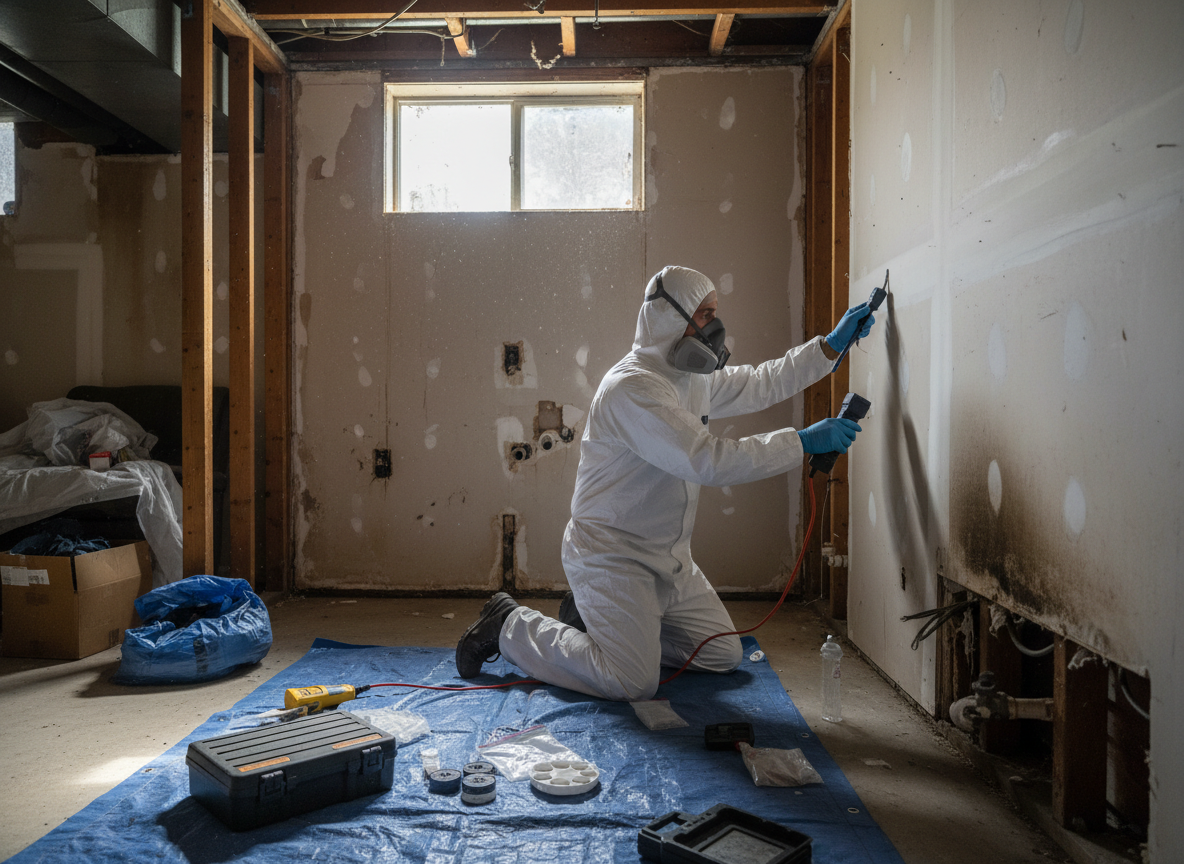
Sun Valley homes built from the 1940s through the 1970s often feature stucco exteriors and crawl spaces that trap moisture after rare but intense winter rains. In the hot dry summers typical of this part of Los Angeles County, residents run evaporative coolers or portable units that can push humid air into wall cavities around Sun Valley Park and La Tuna Canyon. These conditions create hidden growth that air sampling alone can miss, so surface tape lifts and moisture meter readings behind baseboards become essential during testing.
Testing protocols must account for the area’s proximity to Hansen Dam Recreation Area where seasonal runoff and irrigation leaks frequently affect slab-on-grade homes in Shadow Hills. Older ductwork in Pacoima and Burbank-adjacent neighborhoods can circulate spores from attics where dry rot has already started. A proper assessment includes checking HVAC returns and supply registers because the constant 24/7 operation of these systems during summer heat moves contaminants throughout the house before any visible discoloration appears.
Los Angeles County building codes require documentation of moisture sources before any remediation plan, so reports from testing include photographs, relative humidity logs, and thermal imaging of exterior walls facing prevailing winds. Homeowners in Sun Valley sometimes discover that previous cosmetic repairs have sealed moisture inside, turning what looked like a small spot into widespread hidden colonies. Thorough testing identifies these edge cases before any disturbance occurs.
Technician insight
In Sun Valley, the thing that catches most people out with Mold testing near me is how the hot dry summers drive homeowners to run swamp coolers that pull moist air from crawl spaces under 1950s-era homes near Hansen Dam, hiding growth behind cabinets until we pull baseboards.
Hidden Growth Behind Kitchen Cabinets
A Shadow Hills homeowner noticed musty odors after a summer of running a portable cooler. Inspection found elevated moisture in the slab edge near an irrigation line. Air samples from the kitchen returned high aspergillus counts while surface samples behind the cabinets confirmed active growth. Targeted testing allowed precise removal without opening the entire wall.
How it works
- 1
Site Walk-Through
Technician inspects interior and exterior for water intrusion points common in Sun Valley stucco and flat-roof construction.
- 2
Air and Surface Sampling
Collect spore trap and tape-lift samples from living areas, crawl spaces, and HVAC registers while noting humidity levels.
- 3
Laboratory Analysis
Samples sent to accredited lab for species identification and concentration comparison against outdoor controls.
- 4
Detailed Report Delivery
Written findings with photos, moisture data, and recommended next steps delivered within 48 hours.
Pricing
Pricing depends on square footage, number of samples, and access difficulty; quotes provided after initial walk-through.