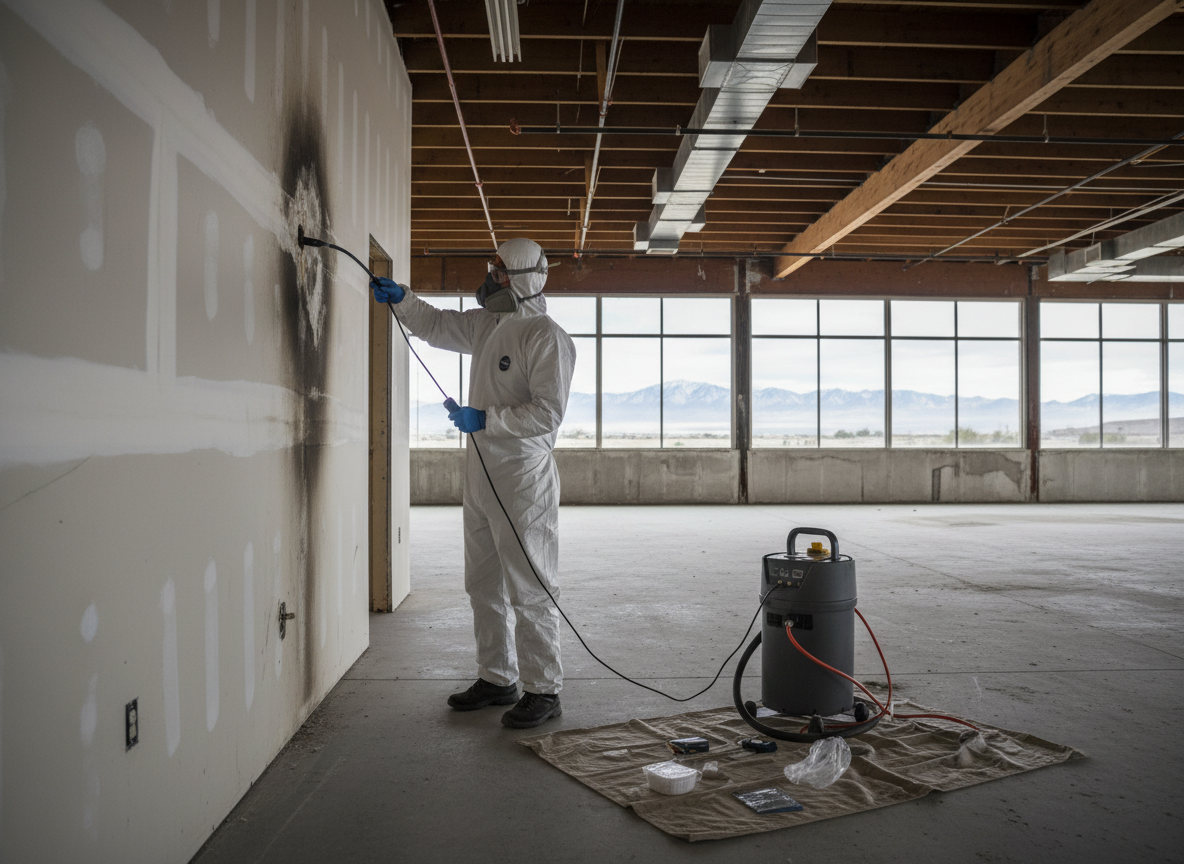
Commercial properties in Sun Valley often sit in older industrial pockets along Sunland Boulevard with flat roofs and stucco exteriors that trap condensation during the warm Mediterranean summers. Inspectors must map HVAC systems and check for water intrusion at loading docks where temperature swings between daytime heat and cooler nights create hidden damp zones. Pacoima and Burbank border properties share similar construction, so cross-contamination risks rise when shared drainage lines feed into the same soil conditions around La Tuna Canyon.
Moisture meters and thermal imaging are essential here because many commercial structures near Sun Valley Park date to the 1950s and 1960s with limited vapor barriers. Inspectors walk every square foot of storage areas and restrooms, noting that even minor roof leaks can spread mold through drop ceilings without visible ceiling stains. Los Angeles County air-quality rules require documentation of spore types when commercial spaces connect to residential units in Shadow Hills.
Edge cases include flood-prone zones near Hansen Dam Recreation Area where seasonal runoff raises foundation humidity even in dry summers. Inspectors flag plumbing chases in multi-tenant buildings and test drywall behind metal shelving units that block airflow. Proper reporting includes chain-of-custody for lab samples so property managers can meet insurance and lease requirements without delays.
Technician insight
In Sun Valley the thing that catches most people out with Commercial mold inspection is older flat-roof warehouses near Sunland Blvd that look dry on the surface but hold moisture in the insulation layer because hot dry summers mask slow leaks until the next rain event.
Pacoima warehouse inspection
A distribution building near the Hansen Dam Recreation Area showed musty odors in the back storage bays. Inspection found elevated moisture in roof insulation from a slow drain line leak that only appeared during rare winter rains. Samples confirmed Penicillium growth; the report guided targeted removal and HVAC cleaning so operations resumed without tenant displacement.
How it works
- 1
Site Walkthrough And Documentation
Technicians arrive at the commercial address and record building age, HVAC layout, and any prior water events before starting moisture readings.
- 2
Moisture Mapping And Sampling
Non-invasive meters and thermal cameras locate damp areas; air and surface samples are collected from suspect zones for lab analysis.
- 3
Report And Recommendations
Findings are compiled into a written report with photos, lab results, and prioritized remediation steps tailored to the property's use and Los Angeles County codes.
- 4
Follow-Up Verification
After any remediation, a return visit confirms moisture levels have returned to normal and no new growth appears.
Pricing
Pricing varies by square footage, number of samples, and accessibility; upfront quotes provided after initial walkthrough.