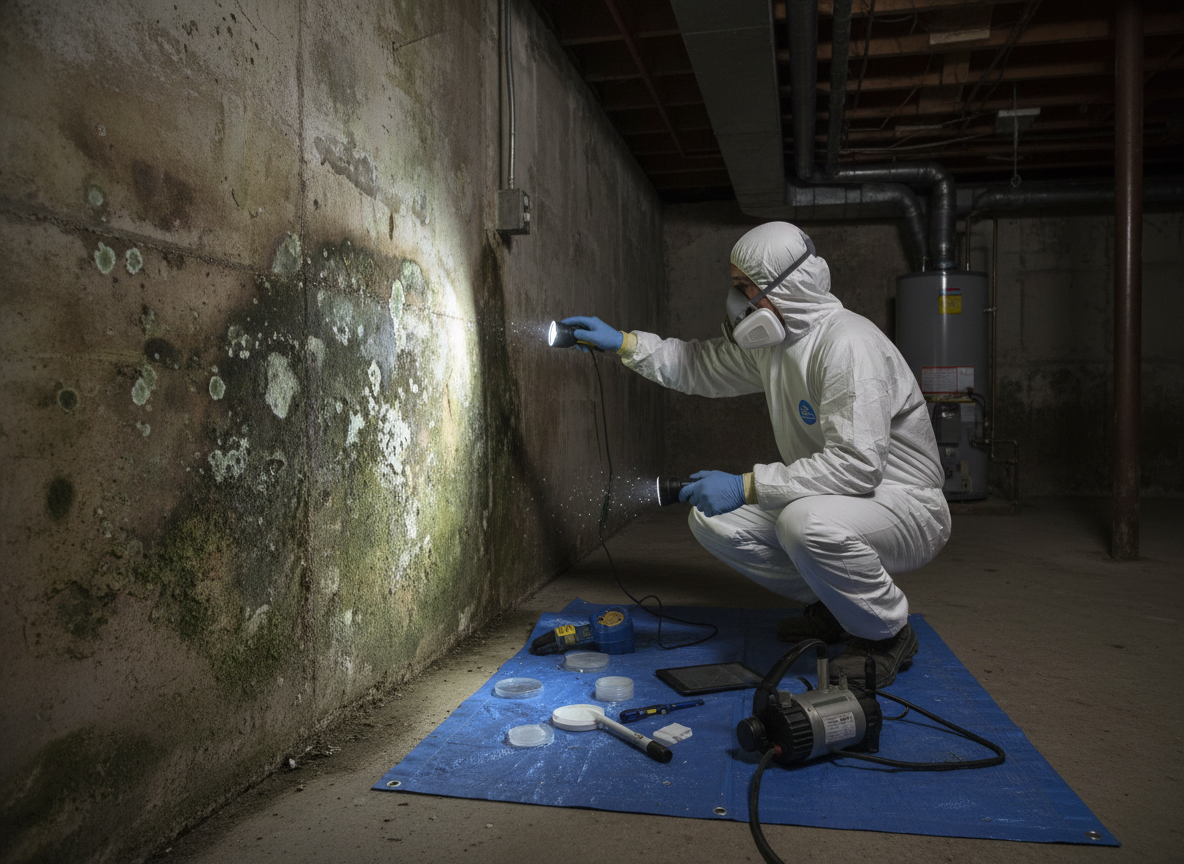
Basement mold inspection in Sun Valley requires attention to the area's post-war housing stock built on sloped lots near Hansen Dam Recreation Area. Older foundations in neighborhoods like Shadow Hills and La Tuna Canyon often sit against compacted soil that channels winter rain toward walls even during the region's hot dry summers. Inspectors check for moisture intrusion from irrigation runoff, cracked stem walls, and poor grading that traps humidity below grade where temperatures stay cooler than the surrounding Los Angeles County air.
Technicians examine HVAC returns, sump pits, and any below-grade storage areas common in Pacoima-adjacent properties. They use moisture meters and thermal imaging to locate hidden growth behind drywall or under carpet without disturbing finishes first. In Glendale-border homes, inspectors also note how the dry climate can hide active leaks until the next rain event pushes water through stucco cracks or window wells.
Local code requires proper ventilation and vapor barriers in finished basements; many Sun Valley properties from the 1950s and 1960s lack these updates. The inspection flags missing weep holes, blocked French drains, and unsealed penetrations that allow spores to circulate into living spaces above. Findings are documented with photos and mapped to the exact location so homeowners can see the path from exterior grade to interior growth.
Technician insight
In Sun Valley the thing that catches most people out with basement mold inspection is how the hot dry summers let small grading issues go unnoticed until winter rain hits the compacted soil along La Tuna Canyon roads. Homeowners often seal the basement from the inside without fixing the exterior slope first, so the moisture returns the next season.
Shadow Hills Home with Recurring Odor
A homeowner in Shadow Hills noticed a musty smell after heavy winter rain near Hansen Dam. Inspection found moisture wicking up through an unsealed foundation joint where the lot sloped toward the house. We mapped the water path from the exterior grade to the interior wall base and recommended exterior regrading plus a vapor barrier. The odor source was eliminated without any wall removal.
How it works
- 1
Initial Assessment
Walk the exterior perimeter around Sun Valley Park and nearby streets to check grading, downspouts, and soil contact with the foundation.
- 2
Moisture Mapping
Use meters inside the basement to record readings on walls, floors, and around any sumps or utility entries.
- 3
Visual and Tool Inspection
Scan with thermal imaging for temperature differences that indicate hidden moisture behind finishes or under flooring.
- 4
Documentation and Report
Photograph findings, note affected materials, and provide a written summary with location-specific recommendations.
Pricing
Pricing depends on square footage, finished versus unfinished space, and whether moisture mapping is required.